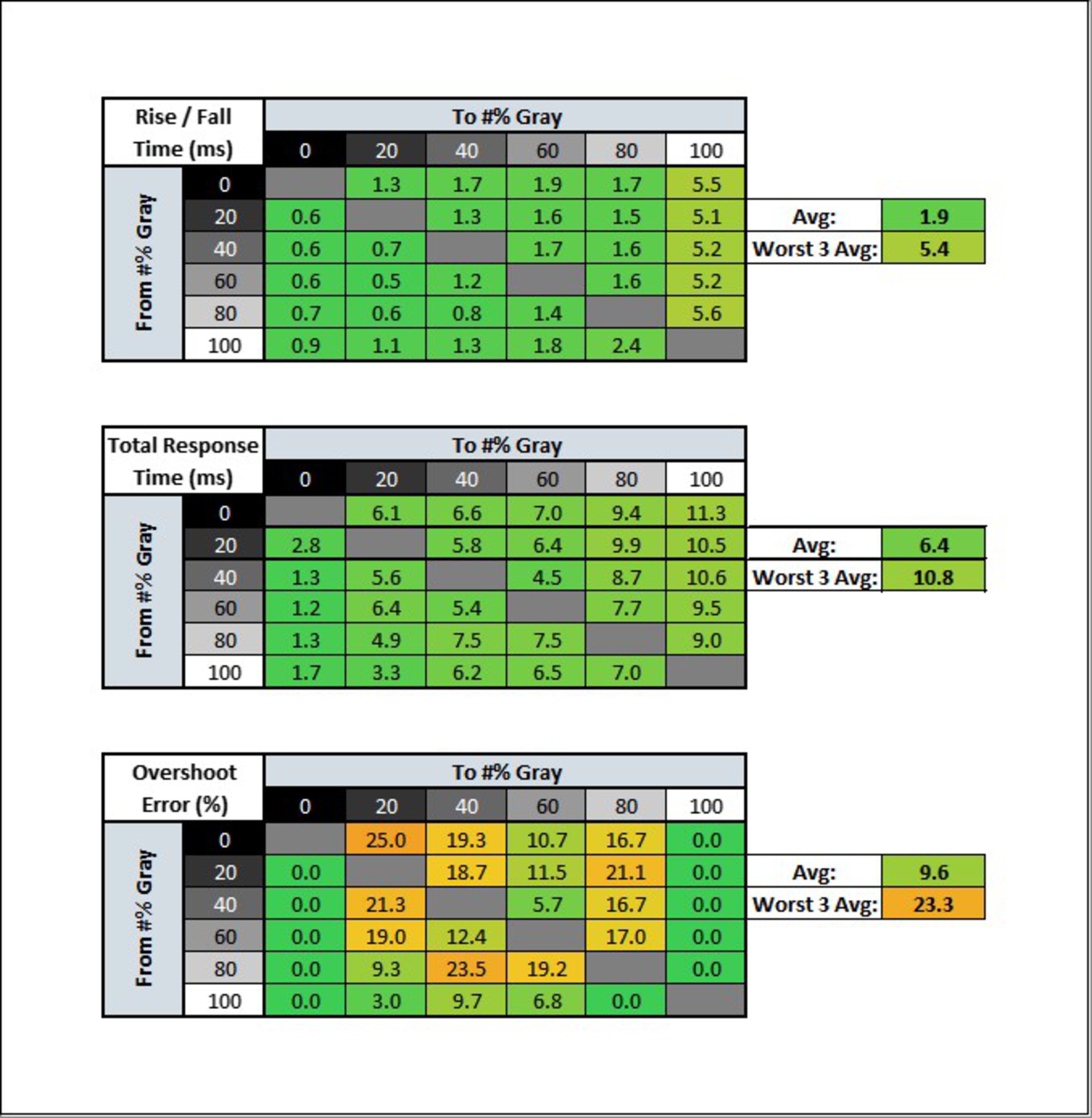
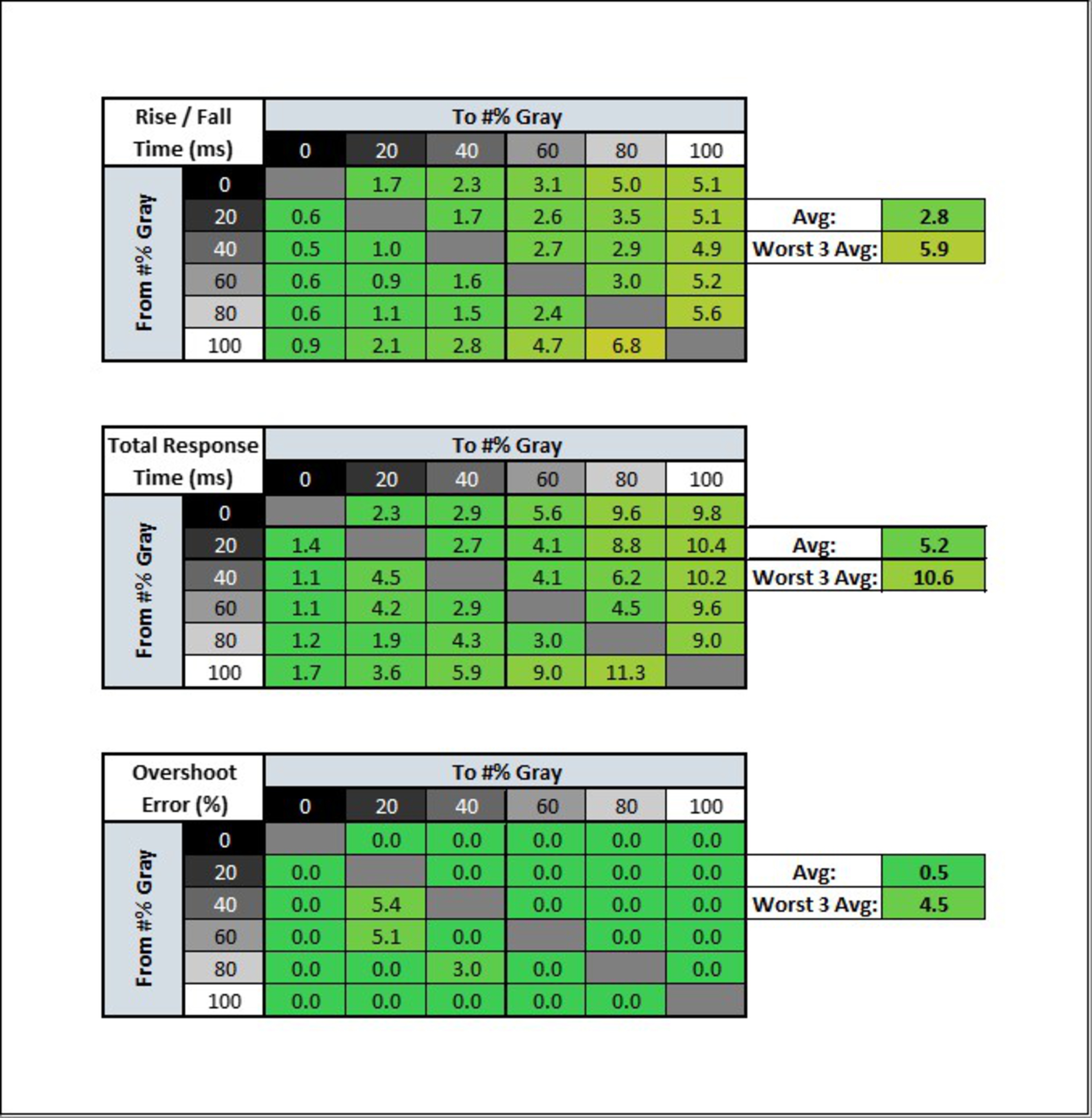
mango87 wrote: ↑01 Jul 2023, 19:34
If the pixels don't transition quickly enough from one color to the next within a refresh window, you could say that the refresh rate is "fake".
<RABBIT HOLE ALERT>
If you say that, then even pixel response that doesn't finish within the first 5-10% of a refresh cycle is also "fake" too.
GtG that takes a full refresh cycle to go to 100%, still is quite much human-noticeably more motion-blurry than GtG 0%.
It's actually a continuum.
The only way Blur Busters Law scales linearly with refresh rate is if GtG=0ms (instant). That's the only way 240fps 240Hz is perfectly exactly half the display motion blur of 120fps 120Hz.
When GtG takes a full refresh cycle to go to GtG100%, there is quite noticeably more motion blur in TestUFO ghosting test.
Even LCD displays that manage to do GtG100% in less than a refresh cycle, still is more motion-blurry than the released OLED displays or the prototype direct-view MicroLED displays. Even the OLED doesn't do GtG100% in 0ms, but it does it a hell lot better, if you're looking to minimize display motion blur without strobing.
Currently, the dominant blur is the MPRT blur, and GtG adds to the MPRT blur as a ghosting effect.
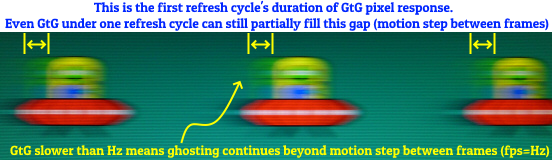
GtG can 'stairstep' somewhat over multiple refresh cycles, as the LCD keeps gets repeatedly refreshed, with GtG re-speeding up ever closer and closer to its final value.
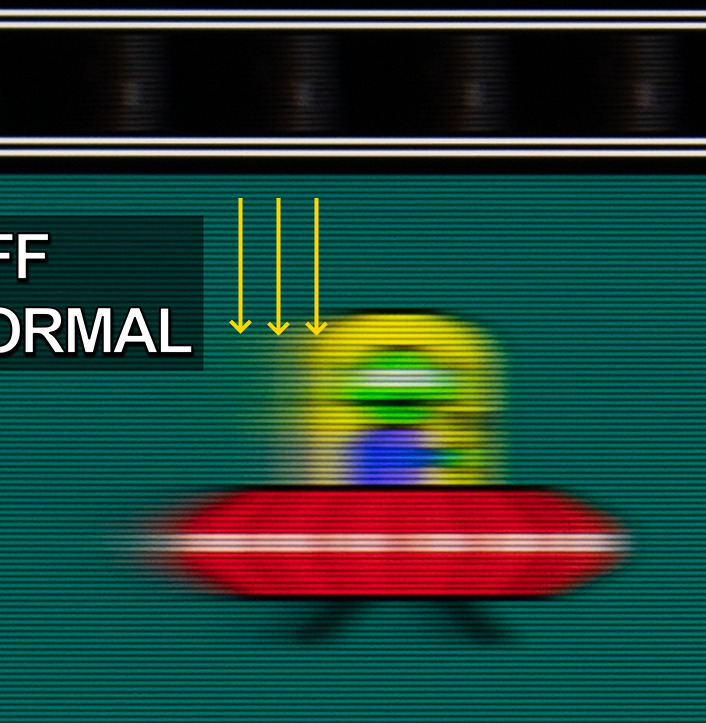
Also, remember VESA GtG standard hides 20% of the GtG:

So some of the GtG's you see, are omitting 20% of GtG (first 10% and last 10%) that is still human visible, especially during LCD strobing, but can also manifest itself as blurred ghosting afterimages.

So anything "GtG not equals 0" could in theory be called "fake".
That being said, there's no perceptual difference between a display that completes GtG in 0.9 of a refresh cycle, versus GtG in 1.1 refresh cycle -- it's a very minor difference. You need 0ms to completely eliminate ghosting. Even partial-Hz GtG still has HUMAN VISIBLE GHOSTING!
The bottom line is almost no LCDs can do GtG100% in less than a refresh cycle, if you're doing GtG0->100% measurements, rather than GtG10%->90%. So this thread is (mostly) moot, since we're nitpicking whether crossed the GtG89% versus GtG91% "finish line". No human perceptual difference with such a tiny difference, except it creates a smaller number because VESA defined the "finish line" as GtG10%->90%.
Remember if GtG reaches 91% before a refresh cycle ends, and a reviewer used the GtG90% cutoff, then you still have 9% ghosting intensity that the reviewer did not measure. Good reviewers will publish both GtG90% and GtG99%+. The cutoff thresholds were necessary due to noise floor of oscilloscope equipment, especially with photodiodes directly connected (not via an op-amp). In 1990s when VESA did the standard, people used $500 oscilloscopes directly connected to photodiodes. In 2020s, people now use $25 Arduinos with an op-apped photodiode, so now we can easily do GtG1%-99%.
So assignment of the word "fake" is a silly polar threshold, since it's an analog continuum of how intense/faint ghosting is. Faint ghosting can still occur even with GtG less than a refresh cycle, though it's still an excellent aspiration for an LCD to do GtG less than a refresh cycle -- but we shall not stop there.
Remember 1ms means 8 pixels of ghosting at 8000 pixels/sec, so true GtG 1ms is still human-visible ghosting. We need to get as close as possible to GtG 0ms, or fully transitioned pixels in a tiny fraction of a Hz. OLED, for example, does it much more reliably, which is why OLEDs look 1.5x to 2x clearer in motion -- this is why a 240Hz OLED can produce clearer motion than the world's fastest 240Hz LCD and the vast majority of 360Hz LCDs.
However, GtG slower than a Hz is not completely useless. Sheer brute Hz can compensate to a point, which is why despite BenQ XL2566K having slower GtG than an OLED, and despite some colors being slower than a Hz (and via DyAc OFF), still can look roughly as clear-motion as a 240fps 240Hz OLED.
It's important to measure this stuff, but it's also important to correctly interpret reviewer data, and at least understand what side effects GtG produces.
More reading at
www.blurbusters.com/gtg-vs-mprt and
www.blurbusters.com/1000hz-journey
</RABBIT HOLE ALERT>