Naveronasis wrote: ↑04 Jun 2021, 04:21
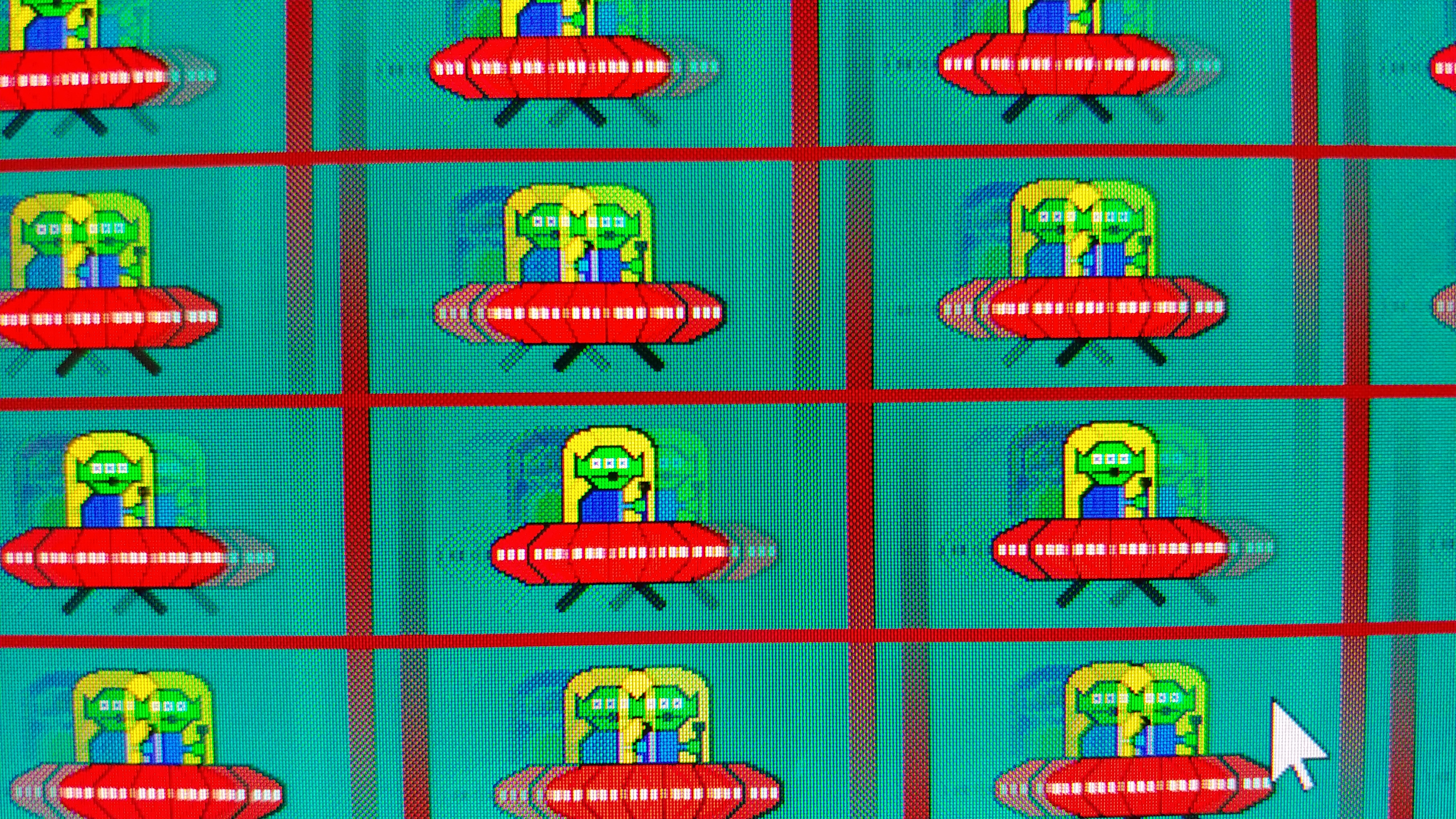
I have a fairly good camera and a Samsung U32H85X 4k quantum dot monitor here is an image of some serious crosstalk in overdrive mode. Feel free to use this anywhere.
Nice photo! A good attempt, which only needs minor tweaks to more-or-less match 1:1 WYSIWYG. The exposure clearly shows crosstalk issues.
Camera Technique Commentary
(from years of experience staring at these photos)
What camera and camera settings are you using? I do observe there’s a slight amount of camera-sensor rolling-shutter scan artifact. Some sensors are rolling scan shutter rather than global shutter.
This can create accidental deviations that make the camera less of a 1:1 match between what the eye saw and what the camera saw — even if they look similar. So I have a hawk eye to see subtle artifacts.
I immediately see this, because crosstalk doesn’t usually do two “identical intensity stair steps” horizontally within the same photo simultaneously — see how the line stairsteps towards the right as you go from top to bottom? In a camera exposure capturing 1 single strobe flash, there should only be one equal-visibility stairstep shift, but I see two, and the only situation that happens is either a longer exposure or a camera-sensor rolling scan).
There can still be 3+ strobe crosstalk positions on a terrible LCD that ghosts over multiple refresh cycles, but with a global shutter, they all overlapped-shift only by 1 frame (i.e. 3+ bad duplicates shifting horizontally by only 1 refresh cycle step, no 2 as in this photo). I see horizontal shift of 2 refresh cycles here, so you either had a long exposure or a slow (multi-display-Hz) rolling scan camera shutter.
Stationary (non-pursuit) crosstalk photography tends to work most WYSIWYG when:
- from a distance (zoomed closeup rather than macro closeup)
- human-eye viewing distance
- using a shutter speed equal (or slightly faster) than one refresh cycle.
Typical camera settings for stationary-photo strobe crosstalk photography: Shutter priority, global shutter usually found in SLR or mirrorless, camera at human view distance typically arm’s length from 24-27” monitor (approx screen size = camera distance), 6500K fixed color temp, fixed focus, manual exposure to exactly 1 refresh cycle (if not exact, round down to the next available shutter length), light amount of optical zoom as needed for detail work. And ISO adjusted to prevent overexposure/unexposure since this is shutter-priority.
The other technique is pursuit photography which is more accurate for an eye-tracking situation, (Camera tracking = eye tracking, while stationary camera = staitonary eyes), which makes the camera less exposure-sensitive (stack multiple refresh cycles in a longer exposure as you slide the camera horizontally), but that speciality technique takes more practice.
 they have all this unlocked without an outside app.