Solo rhythm games are slightly less lag-critical than first person shooters. One can pre-train themselves to compensate for lag.
Remember, some of the lag
includes the human -- aka human reaction time.
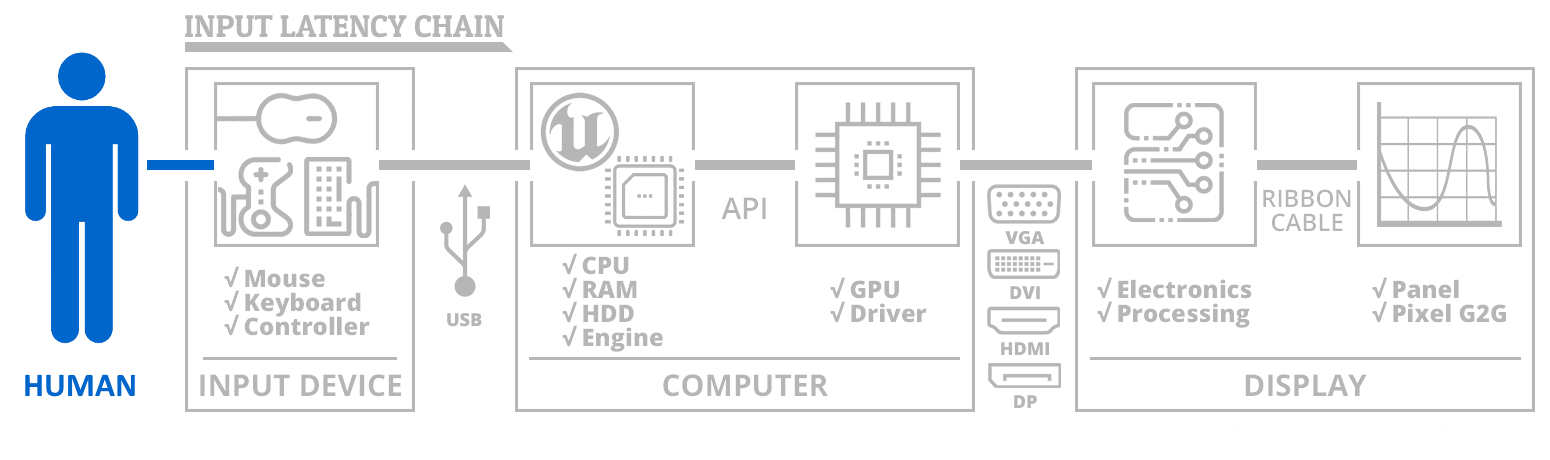
Sometimes the motion blur reduction of strobe backlights reduce human reaction time MORE than the input lag added by strobe backlights.
It's play by play, depending on
gaming technique, gaming tactics & how motion-blur-sensitive the technique is.
Sometimes blur reduction outweighs strobe lag (a very mere +2ms extra lag for ViewSonic XG2431 strobe backlight) because your human reaction time is 2ms faster because of clearer motion for a specific game (e.g. trying to identify fast-moving camoflaged objects via eye tracking).
Frankly speaking, a careful cherry-picking of a strobe backlight is worthwhile for certain applications and use cases. Some games benefit less (CS:GO) while other games benefit more (Rainbow Six and Rocket League). Some of the top Rainbow Six champs use strobing, because the benefits outweigh the minor lag penalty (240Hz+ strobing on the best 240Hz strobe backlights, can have a lag penalty sufficiently minimized that other things outweigh)
Also, one of the biggest problem with strobe backlights is the latency gradient caused by VSYNC OFF with strobe backlights, especially at lower refresh rates. Sometimes one really want to use either RTSS Scanline Sync to make strobe really shine (perfect framerate=Hz in the lowest latency method possible without the traditional VSYNC ON latencies associated)
VSYNC OFF + nonstrobed = latency of screen areas is
top=center=bottom
VSYNC OFF + strobed = latency of screen areas is
top>center>bottom
VSYNC ON + nonstrobed = latency of screen areas is
top<center<bottom
VSYNC ON + strobed = latency of screen areas is
top=center=bottom
What many don't realize for rhythm games is that latency gradients can screw around with reaction times, especially with different lags for different pixels of the screen (from scanout latency -- high speed videos at
www.blurbusters.com/scanout ...) since not all pixels refresh at the same time. And sometimes the relative time-symmetry between scanout-following technologies (VSYNC OFF) and global technologies (global-frame VSYNC ON in sync with global flash-strobing) can sometimes unify the latency of all pixels on the entire screen surface (even if absolute lag is slightly worse).
TL;DR: Sometimes one has to pick poisons. Avoiding strobe backlights like the plague is sometimes a mistake for certain types of video games! One has to understand (A) human lag; and (B) the latency gradient behaviors.