BTRY B 529th FA BN wrote: ↑27 Feb 2022, 10:23
axaro1 wrote: ↑27 Feb 2022, 09:59
I will try to VT tweak 390hz soon and use the same pixel clock to tweak VT at 240.
What are these VT tweaks? Are you talking about just adjusting brightness, gamma, things like that?
VT tweaks does those two things:
- Faster refresh cycle deliver on a per-refresh-cycle basis
- More time to hide LCD GtG pixel response between refresh cycles.
Not all pixels on an LCD refresh at the same time, see
high speed videos of LCD refresh cycles, or just play this YouTube of a typical 2ms TN LCD playing a TestUFO that swaps 4 dramatically different frames rapidly (one frame per refresh cycle):
Refresh cycles are transmitted over the cable and refreshed onto the screen, one pixel row at a time, often at the same velocity of the refresh rate. A 60 Hz refresh cycles sweeps in 1/60sec.
This can be a very big problem for strobe backlights, because the backlight has to stay turned off while the screen is turned off. This is well known in the very old LightBoost high speed video from 10 years ago:
Large VTs modifies this behavior without changing refresh rate. By speeding up the sweep and having longer pauses between refresh cycles. A 60Hz or 120Hz can do a refresh cycle scanout in 1/240sec on many 240Hz monitors.
This is also called Quick Frame Transport by HDMI Forum:
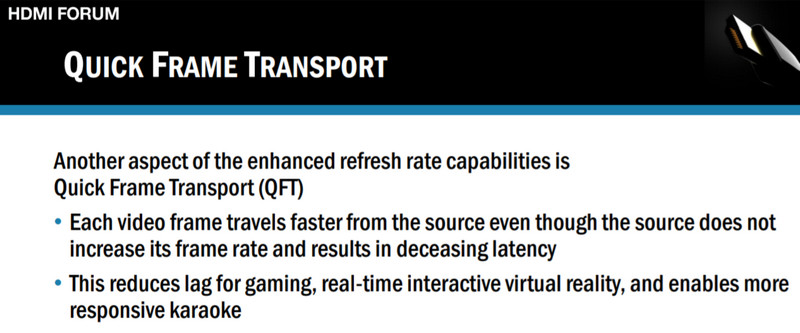
(from
this thread)
But it works on any cables (VGA, DVI, DisplayPort) with a ToastyX CRU hack.
Since most gaming monitors realtime-streams the scanlines from cable to panel, a faster sweep on the cable (GPU outputting pixel rows faster without changed Hz), the panel will often refresh faster too = less input lag for lower Hz modes. And another bonus is that strobe backlights work much better, and can outperform OLED/CRTs when configured correctly (e.g. 90Hz on a ViewSonic XG2431 looks as perfectly zero-crosstalk as an Oculus Quest 2!). (Did you know Oculus Quest 2 VR headset essentially uses a form of QFT / large vertical totals too?).
So this can reduce strobe crosstalk.
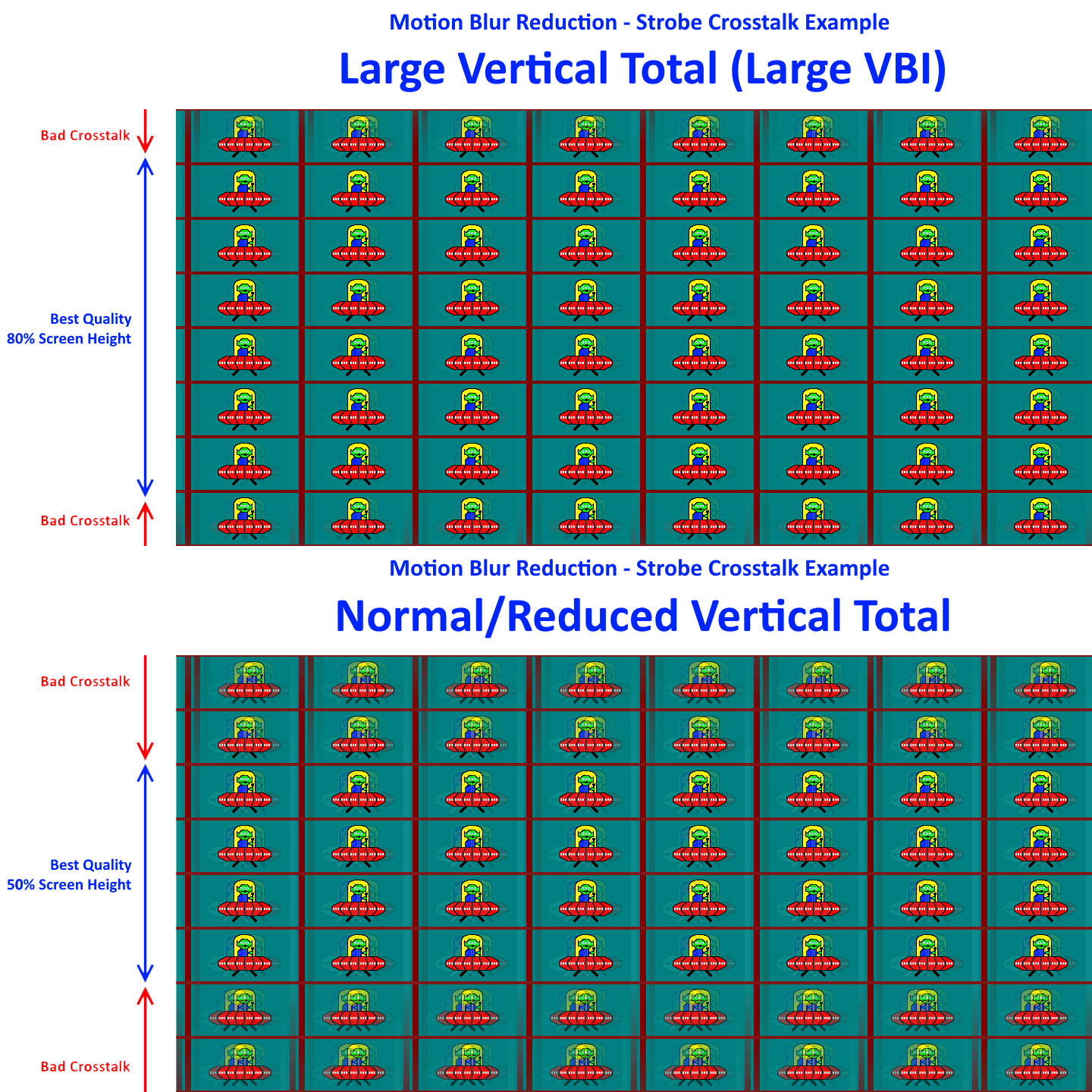
Once you reach refresh rate headrooms of approximately 3:1 to 4:1, the motion clarity of LCD finally begins to exceed a CRT (e.g. underdriving a good 240Hz 1ms IPS LCD at only 80 Hz, with some careful strobe re-tuning) in perfect zero crosstalk operation (less than 1%, below human visible noisefloor), when GtG100% successfully hides (in total darkness, backlight turned off) in a humongous vertical blanking interval between ultrafast-scanout refresh cycles.
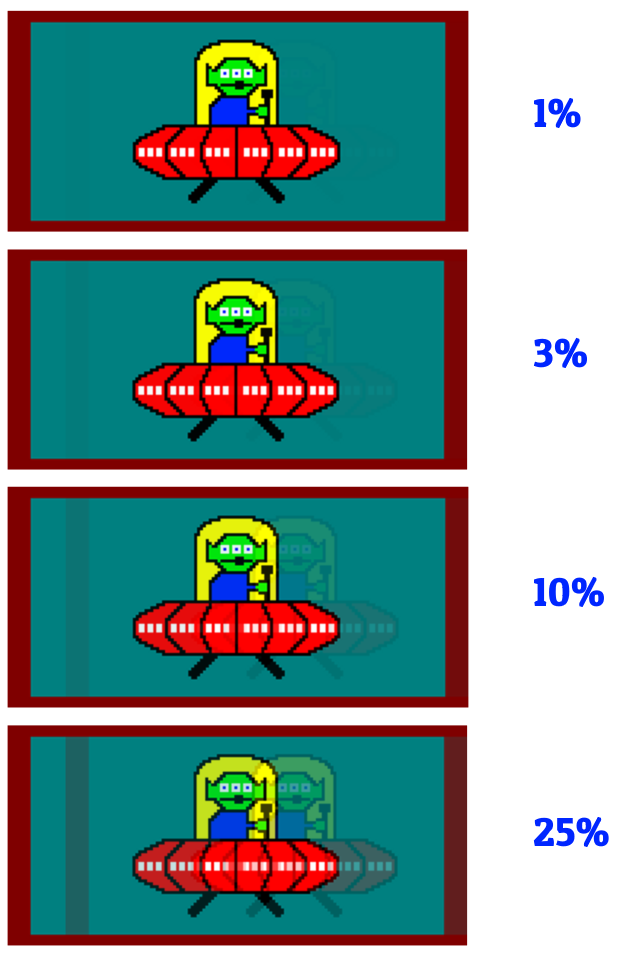
For example, thanks to the strobe tuning flexibility (
www.blurbusters.com/xg2431) -- the ViewSonic XG2431 is one of the best way to get a perfect zero-crosstalk strobed operation (below 0.1% in some cases -- below human visible noisefloor -- even more invisible than the above image). If you've ever tried one of the new "perfect motion clarity" VR LCDs such as Valve Index VR or Oculus Quest 2 VR LCD, you already know LCDs can finally exceed CRT motion clarity under certain very strictly controlled conditions.
Some monitors like the BenQ models are very large-VT friendly, and large VT's were commonly used on BenQ's as a method of reducing strobe crosstalk. But refresh rate headroom was quite limited (e.g. only 33%-50%) on many 144Hz BenQs. it was only recently we can gain 200-300%+ refresh rate headroom, to really, really milk strobe quality to the maximum possible.
While I love CRTs, and even CRT has phosphor ghosting, so seeing LCDs finally fall below the motion-artifacts-noisefloor of CRT, is pretty thrilling for Blur Busters. Less than 1% of LCDs are capable of such perfect zero-crosstalk (top/center/bottom), but the future of LCDs are here today already. I only wish they can now be combined with CRT-gamut backlights, and 10,000-LED local dimming, but that will come in time...
The CRT is the benchmark that we aim to try to get LCDs ever closer and closer to -- it is extremely hard -- but Large VT (QFT), with 1:1 scanrate synchronized streaming from cable to panel, is one of the essential bedrock building blocks for the best zero-crosstalk strobed LCD.
Unfortunately, many manufacturers don't have the big spending budgets necessary, and strobed modes are often a quickly-engineered afterthought, so you see massive degradations (ghosting, double images, poor colors, low brightness). We're slowly trying to change that with the Blur Busters Approved programme...
Eventually large-VT may become more industry standard as plug-and-play QFT EDID's (so users don't have to enter them in monitor menus).

