
consistent frame times V-sync vs G-sync
-
Manimal 5000
- Posts: 58
- Joined: 05 Jul 2015, 21:01
consistent frame times V-sync vs G-sync
So I'm experimenting with getting smooth game play visuals and frame-times. V-sync works well for all this but frame rates must keep up with the refresh rate and that's a problem for this PC. So instead I capped the frame rate (in-game) to the highest stable one and enabled G-sync hoping for a similar result. This revealed massive frame drops and inconsistent frame times. Likewise with G-sync off. Yet the PC maintains the same frame rate with V-sync. Soo is V-sync uniquely stable of did I get something wrong. It would be advantageous if G-sync could get stable frame times. Results below if interested, regards.
- Attachments
-
- ow_fps.jpg (280.7 KiB) Viewed 14446 times
-
Chief Blur Buster

- Site Admin
- Posts: 12284
- Joined: 05 Dec 2013, 15:44
- Location: Toronto / Hamilton, Ontario, Canada
- Contact:
Re: consistent frame times V-sync vs G-sync
Right tool for Right Job.
Erratic frametimes for G-SYNC is completely normal.
As long as randomized frametime:photontime is still stutterfree (demo: VRR random frametime looks smooth).
GSYNC shines even more if you let your framerate float completely. That's why GSYNC on 360Hz monitor can be more heavenly than on a 144Hz monitor, because framerate can "breathe" fully random & stutterlessly without needing a framerate cap.
GSYNC == good for erasing stutters on random frametimes
VSYNC == good if your game is running at max Hz
TL;DR: Use GSYNC when either
(A) You want the VSYNC ON experience with less latency; or
(B) Or you want to make random frametimes look visually stutter free; or
(C) You want to have fluctuating framerates without tearing; or
(D) Multiple of the above.
You aren't supposed to fix random frametimes with GSYNC. That is not what GSYNC is for!
GSYNC is not the tool to get glass-floor frametimes.
GSYNC simply makes random frametimes more visually stutterless by keeping gametime:photontime more in sync without a fixed-refresh-cycle schedule.
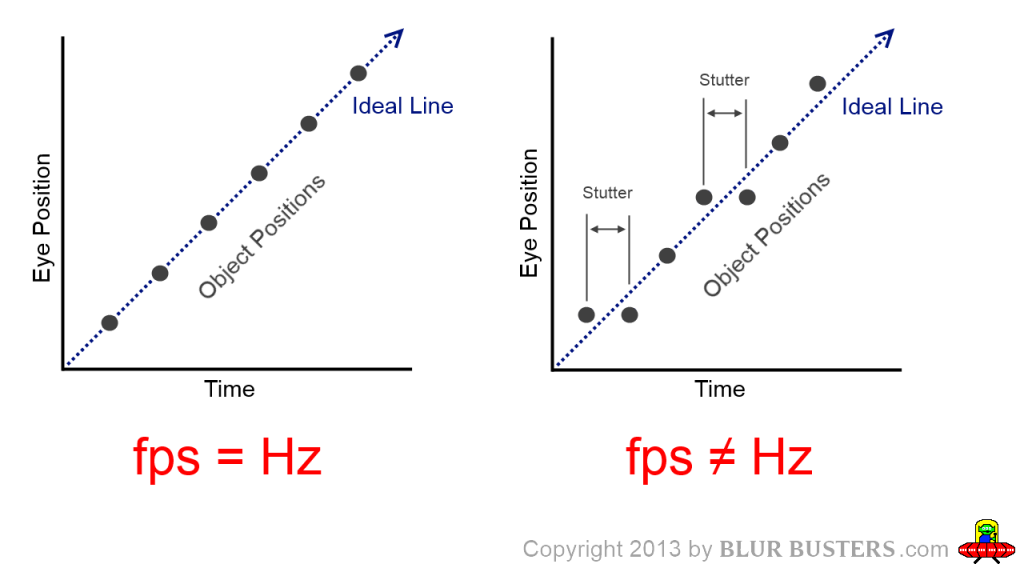
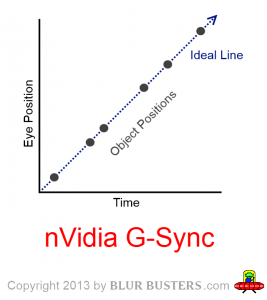
In this case, you WANT random frametimes with GSYNC in most games, if you don't want a cap, you buy a monitor with a VRR range bigger than framerate range, and let the framerate breathe up & down stutterlessly.
Framerate capping for GSYNC was just simply an invention to avoid a worse-evil (VSYNC ON latency will occur when GSYNC hits 144fps at 144Hz). But the perfect G-SYNC scenario is a VRR range so huge you never need to cap, that's why I recommend 360Hz if you hate VSYNC OFF and want to use GSYNC with CS:GO, so the framerate can fully breathe within the framerate range of CS:GO, with esports quality behaviours.
Capping is also used to improve latency consistency, e.g. a game that gyrates too much 50-300fps will have a varying lag 1/50sec thru 1/300sec, creating lag yo-yo effect from GPU rendertimes. So capping (e.g. to 150fps or 200fps) can also concurrently cap your latency yo-yo effect range too, making it easier to aim.
But GSYNC benefits are very game-dependant.
Erratic frametimes for G-SYNC is completely normal.
As long as randomized frametime:photontime is still stutterfree (demo: VRR random frametime looks smooth).

GSYNC shines even more if you let your framerate float completely. That's why GSYNC on 360Hz monitor can be more heavenly than on a 144Hz monitor, because framerate can "breathe" fully random & stutterlessly without needing a framerate cap.
GSYNC == good for erasing stutters on random frametimes
VSYNC == good if your game is running at max Hz
TL;DR: Use GSYNC when either
(A) You want the VSYNC ON experience with less latency; or
(B) Or you want to make random frametimes look visually stutter free; or
(C) You want to have fluctuating framerates without tearing; or
(D) Multiple of the above.
You aren't supposed to fix random frametimes with GSYNC. That is not what GSYNC is for!
GSYNC is not the tool to get glass-floor frametimes.
GSYNC simply makes random frametimes more visually stutterless by keeping gametime:photontime more in sync without a fixed-refresh-cycle schedule.
In this case, you WANT random frametimes with GSYNC in most games, if you don't want a cap, you buy a monitor with a VRR range bigger than framerate range, and let the framerate breathe up & down stutterlessly.
Framerate capping for GSYNC was just simply an invention to avoid a worse-evil (VSYNC ON latency will occur when GSYNC hits 144fps at 144Hz). But the perfect G-SYNC scenario is a VRR range so huge you never need to cap, that's why I recommend 360Hz if you hate VSYNC OFF and want to use GSYNC with CS:GO, so the framerate can fully breathe within the framerate range of CS:GO, with esports quality behaviours.
Capping is also used to improve latency consistency, e.g. a game that gyrates too much 50-300fps will have a varying lag 1/50sec thru 1/300sec, creating lag yo-yo effect from GPU rendertimes. So capping (e.g. to 150fps or 200fps) can also concurrently cap your latency yo-yo effect range too, making it easier to aim.
But GSYNC benefits are very game-dependant.
Head of Blur Busters - BlurBusters.com | TestUFO.com | Follow @BlurBusters on: BlueSky | Twitter | Facebook

Forum Rules wrote: 1. Rule #1: Be Nice. This is published forum rule #1. Even To Newbies & People You Disagree With!
2. Please report rule violations If you see a post that violates forum rules, then report the post.
3. ALWAYS respect indie testers here. See how indies are bootstrapping Blur Busters research!
-
Manimal 5000
- Posts: 58
- Joined: 05 Jul 2015, 21:01
Re: consistent frame times V-sync vs G-sync
Chief Blur Buster wrote: ↑24 Mar 2022, 19:44Right tool for Right Job.
GSYNC == good for erasing stutters on random frametimes
VSYNC == good if your game is running at max Hz
Thanks, I see now that the frame rate inconsistencies are not a concern. I guess V-sync is more "stable" because the PC only worries about drawing 1 frame per refresh cycle whereas G-sync draws all the frames it can, both longer and shorter (hence the frame dips). In the end they average the same frame rate, input lag (?) and "game time to photon time". xcept one is consistent and one sporadic. If I didn't get that right let me know!
-
Chief Blur Buster
- Site Admin
- Posts: 12284
- Joined: 05 Dec 2013, 15:44
- Location: Toronto / Hamilton, Ontario, Canada
- Contact:
Re: consistent frame times V-sync vs G-sync
You got it mostly correct, yes.Manimal 5000 wrote: ↑25 Mar 2022, 02:15Thanks, I see now that the frame rate inconsistencies are not a concern. I guess V-sync is more "stable" because the PC only worries about drawing 1 frame per refresh cycle whereas G-sync draws all the frames it can, both longer and shorter (hence the frame dips). In the end they average the same frame rate, input lag (?) and "game time to photon time". xcept one is consistent and one sporadic. If I didn't get that right let me know!
In fixed-Hz operations, the game/GPU waits for the monitor refresh schedule.
In GSYNC operations, the monitor waits for the GPU/game, and refreshes immediately on the spot.
There is flexibility to what pros/cons you get, but it's very software-dependant.
For some applications, you can gain consistency in all (consistent framerate, consistent input lag, and consistent gametime:photontime), which is why emulator users love GSYNC, because it's the world's lowest-lag "VSYNC ON lookalike" technology. The software just is simply 100% responsible for frametimes, and would require microsecond accurate timers or QueryPerformanceCounter/RTDSC/busywaits to get glassfloor frametimes with GSYNC. It's 100% software-controlled refresh cycle timing when a frametime is within VRR range -- the software is responsible for delivering a frame that refreshes immediately on the spot.
But most of the time, variable-framerate games will erratically deliver frames at erratic frametimes, but as long as "erratic frametimes are in perfect sync to erratic refreshtimes" for perfect gametime:photontime sync, the stutters disappears without needing consistent frametimes. And latency stays perpetually low as the world's lowest latency "non-VSYNC OFF" sync technology.
Mind you, VSYNC OFF can still beat GSYNC in latency especially for framerates massively exceeding Hz (that's why I recommend 360Hz GSYNC if you want to use GSYNC in CS:GO esports -- correct use of GSYNC in esports is VRR range wider than Hz range, so you don't have to deal with the capping shit which is simply just a good band-aid. But let's get rid of band-aids, shall we). However, if you hate tearing, there's practically nothing lower lag than a well-optimized VRR display with a supported game -- being the world's lowest lag "non-VSYNC-OFF" technology, with the caveat that uncapped framerates are permanently inside VRR range...
Also, one magical thing about GSYNC is that all VRR is defacto QFT (Quick Frame Transport). A 83fps frame means an 83Hz refresh rate, but the frame is delivered faster at max-Hz. Not all pixels on a screen refresh at the same time (high speed video of refresh cycles), but GSYNC can lower the latency of low frame rates too. This is because frames are refreshed faster onto the screen, since all frames are transmitted at max-Hz speed, no matter the current fps (Hz). While the refresh rate is still lower at lower frame rates, the individual refresh cycles paint faster.
It looks like 83Hz perfect VSYNC ON at framerate=Hz to the human eye. But the latency is deliciously low because if you're running at 240Hz, your 83fps frame is refreshed onto the screen in 1/240sec. There is no double buffering necessary when your framerate is inside VRR range, because there's no need for a frame to wait for the monitor to refresh (as long as the frametime is inside VRR range). As soon as the game finishes rendering a frame and presents it -- the monitor immediately begin refreshing (pixels transmit over cable one pixel row at a time, and streams onto the LCD panel one pixel row at a time concurrently).
Most fixed-Hz means 60fps 60Hz means it takes 1/60sec for the first and last pixel to transmit over the able.
This is not the case for VRR technologies such as GSYNC and FreeSync. 60fps ("60Hz") on a 240Hz GSYNC is transmitted over the cable in 1/240sec. Both looks like 60fps 60Hz VSYNC ON, but the latency is much lower with framerates within GSYNC refresh rate range. This is because the frame is transmitted faster over the video cable, and painted faster onto the screen.
Head of Blur Busters - BlurBusters.com | TestUFO.com | Follow @BlurBusters on: BlueSky | Twitter | Facebook
Forum Rules wrote: 1. Rule #1: Be Nice. This is published forum rule #1. Even To Newbies & People You Disagree With!
2. Please report rule violations If you see a post that violates forum rules, then report the post.
3. ALWAYS respect indie testers here. See how indies are bootstrapping Blur Busters research!
-
Manimal 5000
- Posts: 58
- Joined: 05 Jul 2015, 21:01
Re: consistent frame times V-sync vs G-sync
I'm may be upgrading the PC/monitor so this is helpful.
Edit: I had to read the G-sync preview https://blurbusters.com/gsync/preview/ to better understand how G-sync works. The "glass-floor" frame time scenario I wanted is unnecessary since, although G-sync frames are sporadic, they are time-corrected by the game engine and all is well...
Edit: I had to read the G-sync preview https://blurbusters.com/gsync/preview/ to better understand how G-sync works. The "glass-floor" frame time scenario I wanted is unnecessary since, although G-sync frames are sporadic, they are time-corrected by the game engine and all is well...
As most game engines adjusts object positions based on the current instantaneous frame rate, object positions are already compensated for momentary early/late presentation of frames. That makes it possible for random frame rates to remain miraculously smooth!