
It appears that in a shocking twist, judging from RTINGS early access review's pursuit shot, the Sony Bravia 7 II's BFI mode performs breddy gud, after a decade of poor performing BFI modes in Sony TVs (which had an amazing lead with Motionflow Impulse and then discontinued it for no reason).
It appears to perform better than the Samsung R95H but not quite on the level of Samsung's best Mini-LEDs.
The pixel response tests match this assessment, with the Bravia 7 II being more responsive than the R95H but noticeably below the QN95D.
Still, we now have a bright RGB MiniLED TV with a glossy finish and a pretty decent BFI mode on the market, not to mention some long overdue competition in this specific niche on low-MPRT TVs, which is something to celebrate.
Hopefully the Bravia 9 II will be good as well, because sadly the zone count on the Bravia 7 II is a bit lackluster.
Still in no hurry to be an RGB-MiniLED TV early-adopter, there is room for improvement for sure, but if one were to dip one's toe, the water seems inviting.
On a side note I cannot see any of the black transition issues reported by troyan on any of the relevant TestUFO tests on my QN90D.
Haven't been able to do serious testings on my QN95D yet because of my busy schedule.
I do acknowledge that backlight lag is a bit of a problem is certain scenes (the strobing night club scene in The Neon Demon is a good example, where local dimming takes a bit too long to disappear, leaving the outline of the characters that have already disappeared still visible, giving the whole scene a much more flimsy look than it does on my OLEDs or Kuro). But in no situation have I seen a visible downgrade in motion clarity when alternating bright colors on black backgrounds.
Obligatory comparison shots: Bravia 7 II VS R95H VS QN95D (current reference in backlight strobing TVs).
Low MPRT strobing LCD TVs (mostly Samsung, some Sony - lots of RTINGS BFI Test image comparisons)
-
JimProfit
- Posts: 78
- Joined: 29 Dec 2024, 19:58
Re: Potentially low MPRT on many 4K and 8K Samsung QLED TVs (lots of RTINGS BFI Test image comparisons)
- Attachments
-
- Bravia 7 II.jpg (2.94 MiB) Viewed 517 times
-
- R95H.jpg (2.92 MiB) Viewed 517 times
-
- QN95D.jpg (2.92 MiB) Viewed 517 times
OLED (HDR): LG OLED65G1 - LG OLED55GX
LCD (HDR): Samsung 65QN95D - Samsung 65QN90D - Asus PG27AQN - Panasonic 58EX780E
LCD (SDR): Asus PG27VQ - Asus PG278QR
PDP (SDR): Pioneer KRP500A
CRT (SDR): Sony FW900 - Sony D24E1WE (ooo) - Iiyama HM204DT - Mitsubishi 2070SB - Toshiba 2887DF
LCD (HDR): Samsung 65QN95D - Samsung 65QN90D - Asus PG27AQN - Panasonic 58EX780E
LCD (SDR): Asus PG27VQ - Asus PG278QR
PDP (SDR): Pioneer KRP500A
CRT (SDR): Sony FW900 - Sony D24E1WE (ooo) - Iiyama HM204DT - Mitsubishi 2070SB - Toshiba 2887DF
-
roginthemachine
- Posts: 22
- Joined: 21 Jul 2024, 01:28
Re: Potentially low MPRT on many 4K and 8K Samsung QLED TVs (lots of RTINGS BFI Test image comparisons)
It’s promising but to beat the QN90D, I’d want a display that had some combination of - MPRT below 2 msec, superior brightness at 2 msec MPRT, or reduced crosstalk artifacts at 2msec MPRT
Bravia 7 ii doesn’t really meet any of the above.
Lets see how the Bravia 9 ii fares.
And who knows, maybe a firmware update for the R95H could change the calculus too…
Bravia 7 ii doesn’t really meet any of the above.
Lets see how the Bravia 9 ii fares.
And who knows, maybe a firmware update for the R95H could change the calculus too…
-
JimProfit
- Posts: 78
- Joined: 29 Dec 2024, 19:58
Re: Potentially low MPRT on many 4K and 8K Samsung QLED TVs (lots of RTINGS BFI Test image comparisons)
Yeah I have no clue whether any of the RGB-MiniLED TVs can further increase their motion clarity by lowering brightness, like the QN90/QN95 models, but in any case pixel response time appears to play a big part in the final result.
For all I know the R95H has an excellent strobing in and of itself, but the sub-par response times produce a result that is below previous Samsung LCD flagships. And I don't think pixel response times can be fixed via firmware.
Like the R95H, the Bravia 9 II has a matte coating so that's a bit of a turn off for someone like me who just want the closest to a CRT, even if it will probably prove to be brighter with a lot more dimming zones compared to the 7 II.
If I had to re-equip myself from scratch and couldn't get my hands on a QN90D/QN95D, I would probably go for the Bravia 7 II at this precise moment, it is at least as bright as the QN90D/QN95D, but hopefully in the future both Samsung and Sony will deliver better options.
For all I know the R95H has an excellent strobing in and of itself, but the sub-par response times produce a result that is below previous Samsung LCD flagships. And I don't think pixel response times can be fixed via firmware.
Like the R95H, the Bravia 9 II has a matte coating so that's a bit of a turn off for someone like me who just want the closest to a CRT, even if it will probably prove to be brighter with a lot more dimming zones compared to the 7 II.
If I had to re-equip myself from scratch and couldn't get my hands on a QN90D/QN95D, I would probably go for the Bravia 7 II at this precise moment, it is at least as bright as the QN90D/QN95D, but hopefully in the future both Samsung and Sony will deliver better options.
OLED (HDR): LG OLED65G1 - LG OLED55GX
LCD (HDR): Samsung 65QN95D - Samsung 65QN90D - Asus PG27AQN - Panasonic 58EX780E
LCD (SDR): Asus PG27VQ - Asus PG278QR
PDP (SDR): Pioneer KRP500A
CRT (SDR): Sony FW900 - Sony D24E1WE (ooo) - Iiyama HM204DT - Mitsubishi 2070SB - Toshiba 2887DF
LCD (HDR): Samsung 65QN95D - Samsung 65QN90D - Asus PG27AQN - Panasonic 58EX780E
LCD (SDR): Asus PG27VQ - Asus PG278QR
PDP (SDR): Pioneer KRP500A
CRT (SDR): Sony FW900 - Sony D24E1WE (ooo) - Iiyama HM204DT - Mitsubishi 2070SB - Toshiba 2887DF
-
kyube

- Posts: 934
- Joined: 29 Jan 2018, 12:03
Re: Potentially low MPRT on many 4K and 8K Samsung QLED TVs (lots of RTINGS BFI Test image comparisons)
Those are all mediocre effective motion clarity targets, considering the RTINGS pursuit photograph is done at 1920px/s.
In comparison, an actual ≤0,5 ms pulse on interval display (XL2546X @ DyAc2 Premium):
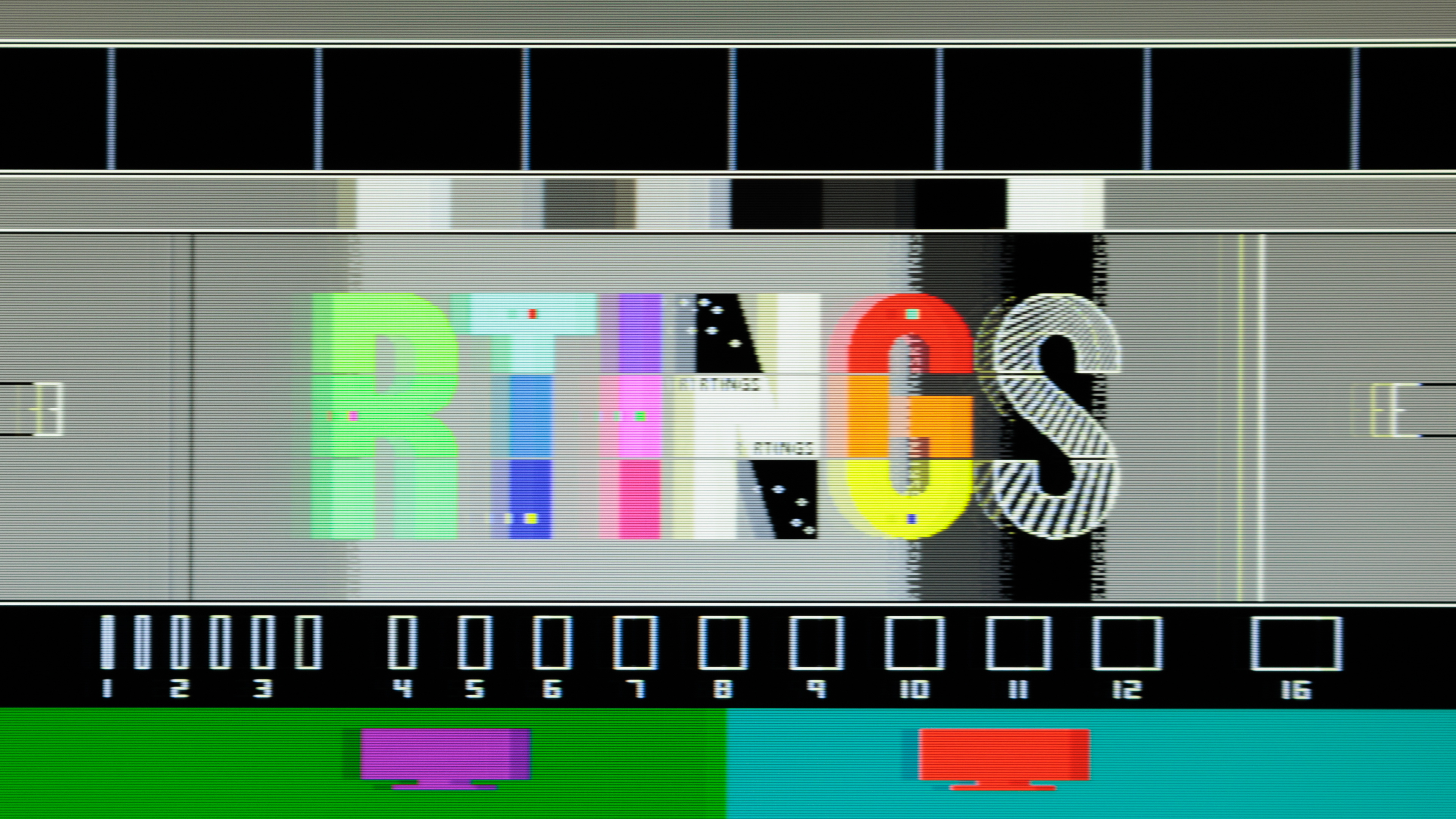
If it's not like this, it isn't anywhere close to "CRT-like".
The biggest issue I have with TVs is that, when I last checked, majority of them still employ severe multi-PWM light dimming flicker.
This degrades dynamic image quality even further...
Not having a proper S&H mode & a proper impulse-based mode in a TV format (≥30") for 2 decades now is quite a meme.
evaluating xhci controller performance | audio latency discussion thread | "Why is LatencyMon not desirable to objectively measure DPC/ISR driver performance" | AM4 / AM5 system tuning considerations | latency-oriented HW considerations | “xhci hand-off” setting considerations | #1 tip for electricity-related topics | ESPORTS: Latency Perception, Temporal Ventriloquism & Horizon of Simultaneity | good lcd backlight strobing implementation list | display vs gpu scaling
-
JimProfit
- Posts: 78
- Joined: 29 Dec 2024, 19:58
Re: Potentially low MPRT on many 4K and 8K Samsung QLED TVs (lots of RTINGS BFI Test image comparisons)
Sure, I've said it a few times in this topic already, but even the very best strobing LCD TVs remain noticeably behind the best strobing LCD monitors, we're only talking in terms of "closest approximation" here.kyube wrote: ↑06 Jul 2026, 09:07
Those are all mediocre effective motion clarity targets, considering the RTINGS pursuit photograph is done at 1920px/s.
In comparison, an actual ≤0,5 ms pulse on interval display (XL2546X @ DyAc2 Premium):
Not having a proper S&H mode & a proper impulse-based mode in a TV format (≥30") for 2 decades now is quite a meme.
Though again in practice, not only are not all CRT truly sub-1ms MPRT, they have their own sets of quirks, but there is also "diminishing return" to lower MPRT.
8.33ms MPRT closes the gap to CRT by roughly ~50% (I know about ghosting, crosstalk etc, but let's talk broad strokes in an ideal scenario), 4.16ms MPRT reduces blur by ~75% (example: the LG CX/GX at 60hz Motion Pro High) and 2ms (which is the ballpark of the better Samsung TVs with BFI AND brightness lowered to SDR levels) removes ~85% of the sample and hold blur.
My PG27V at 120hz ULMB and lowered pulse width, definitely reach sub-1ms MPRT and thus can honestly defeat most CRT monitors, apart from the fact it has 2"/5cm of very mild crosstalk at the bottom of the screen.
It can be hacked to do 60hz ULMB and also there is a trick to do ULMB + G-sync at the same time, roughly a decade prior to the advent of Pulsar. Though I have to find a way to cap the lower VRR range 'cause 30fps locked games are just brutal. The real kicker is the poor contrast and grainy matte finish.
My PG27AQN is all in all pretty great, but I can't hack it to do 60hz, I haven't even tried doing the ULMB+G-sync trick yet, and the KSF phosphor trails are visible in some situations, though less so the higher the refresh you use.
But the fact that HDR peak brightness is higher than any Pulsar monitor on the market today makes me want to keep it on my main setup for now. The semi-matte coating is also slightly less offensive than the one on my PG27V, for what little that's worth.
There are probably limitations that prevent large screen TVs from reaching this level, but in return I gain a much bigger display, higher resolution, a lot more brightness to sacrifice at will in favor of motion clarity, much more contrast, a glossy panel, etc...Which in my view makes it a far more CRT-like experience, in its totality, than what my ULMB monitors afford me.
Nevertheless, no matter the caveats and asterisks, when it comes to motion clarity, in TVs, Samsung's high-end Mini-LEDs reign supreme (with Sony's RGB MiniLEDs apparently emerging as a viable alternative in 2026).
I highly doubt any older Sony Motionflow Impulse TV from over a decade ago did inherently better in motion compared to my two Samsung Mini-LEDs, and they are so inferior in every other way that it's a moot point.
There is room for improvement but what cannot be denied is that those shots you deem as "mediocre" are much closer to the example you gave, than they are to regular 60hz sample and hold pursuit shots, or even with regular (motion blur halving) BFI turned on.
(Pursuit shot of OLED 60hz BFI below for comparison. EDIT: updated to newer S90H pursuit shot because the older S90D shot I had in my documents felt fishy/blurrier than it should be?)
And in OLED TVs the CX/GX came the closest to CRT (but in reality merely closest to plasma) and I can't wait for a successor, but they are and likely will remain far behind what LCD can do when given the chance.
Still want the best of both tech though, I can't emphasize that enough.
- Attachments
-
- S90H.jpg (2.33 MiB) Viewed 342 times
Last edited by JimProfit on 12 Jul 2026, 15:42, edited 1 time in total.
OLED (HDR): LG OLED65G1 - LG OLED55GX
LCD (HDR): Samsung 65QN95D - Samsung 65QN90D - Asus PG27AQN - Panasonic 58EX780E
LCD (SDR): Asus PG27VQ - Asus PG278QR
PDP (SDR): Pioneer KRP500A
CRT (SDR): Sony FW900 - Sony D24E1WE (ooo) - Iiyama HM204DT - Mitsubishi 2070SB - Toshiba 2887DF
LCD (HDR): Samsung 65QN95D - Samsung 65QN90D - Asus PG27AQN - Panasonic 58EX780E
LCD (SDR): Asus PG27VQ - Asus PG278QR
PDP (SDR): Pioneer KRP500A
CRT (SDR): Sony FW900 - Sony D24E1WE (ooo) - Iiyama HM204DT - Mitsubishi 2070SB - Toshiba 2887DF
-
brownvim
- Posts: 228
- Joined: 22 Jun 2020, 04:15
Re: Potentially low MPRT on many 4K and 8K Samsung QLED TVs (lots of RTINGS BFI Test image comparisons)
Is there a way to get the proper Rtings pursuit picture for different resolutions so I can try and make my own pursuit shots using smooth frog?
5800X3D, RTX 5080 FE, OLED AW3423DW + Acer Pulsar XB273U F5
-
Discorz

- VIP Member
- Posts: 1143
- Joined: 06 Sep 2019, 02:39
- Location: Europe, Croatia
- Contact:
-
brownvim
- Posts: 228
- Joined: 22 Jun 2020, 04:15
Re: Potentially low MPRT on many 4K and 8K Samsung QLED TVs (lots of RTINGS BFI Test image comparisons)
Even better, thanks!
5800X3D, RTX 5080 FE, OLED AW3423DW + Acer Pulsar XB273U F5
-
brownvim
- Posts: 228
- Joined: 22 Jun 2020, 04:15
Re: Potentially low MPRT on many 4K and 8K Samsung QLED TVs (lots of RTINGS BFI Test image comparisons)
The Rtings pattern looks perfect at 60hz and 120hz at 3840 pixels on a Pulsar, like your looking at a still image. Honestly the pursuit picture below doesn't do it justice.
Image 120hz, PW30, 3840 pixels, 170 nits
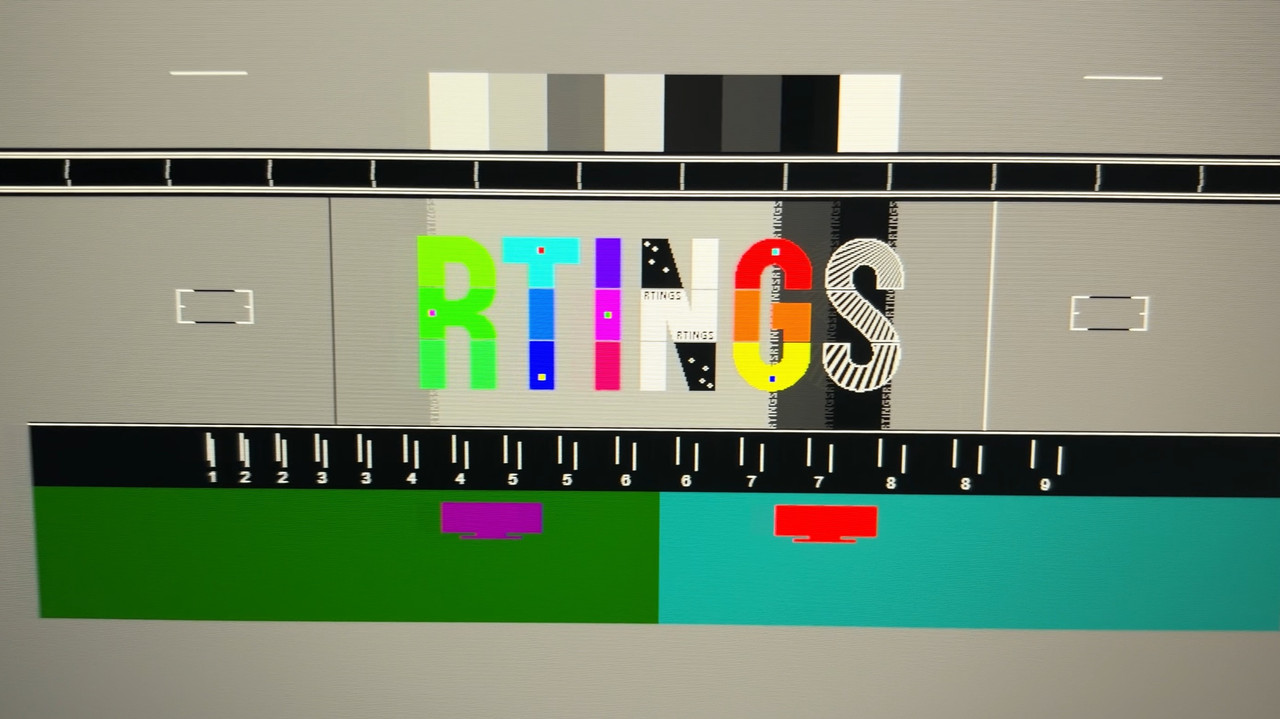
I would love to get the same clarity on a big 4K TV with good HDR for console gaming, we not quite there yet.
Image 120hz, PW30, 3840 pixels, 170 nits
I would love to get the same clarity on a big 4K TV with good HDR for console gaming, we not quite there yet.
5800X3D, RTX 5080 FE, OLED AW3423DW + Acer Pulsar XB273U F5
-
Clear Motion Seeker
- Posts: 41
- Joined: 29 Apr 2023, 12:47
Re: Potentially low MPRT on Samsung QLED 4K TVs QN90D and QN95D + 8K QN900A/B/C/D models
That's because the black frame stays longer i suppose, hence the clearer image at the cost of brightness loss.JimProfit wrote: ↑03 May 2025, 10:47Update: RTINGS review for the QN90F just dropped.
BFI test picture looks absolutely amazing and is compatible with both 60hz and 120hz and a clear improvement over the QN90D test picture, but sadly it appears quite dim and the screen features a matte coating which doesn't seem to do anything good for black levels/contrast. Base brightness is comparable between both models, no generational improvement in that area.
BFI test picture of both included for comparison.
Perhaps removing the matte coating would improve things slightly, but in a world where HDR gaming is getting increasingly more important, having a BFI mode that preserves a lot of brightness plainly seems like a better choice for me, even if it's ~2ms MPRT rather than ~1...
Seems we just can't have a TV that does everything right.
It would be so much better if we could control bfi level in a very gradual way similar to contrast, brightness, color, sharpness and so on.